SEO Tools for Small Agencies · Updated 29 October 2026
Seven Jobs You Can Hand to an AI Agent
Seven agency jobs handed to an AI agent on 29 October 2026, with the one line instruction, the output and the human check for each, including a real audit.
- 20 min read
- ai agents for small agencies
- Verified against vendor pricing
The short answer
Seven agency jobs were handed to an agent on 29 October 2026 with a single line of instruction each. Two ran against live systems and five ran against sample data published here so you can reproduce them. The most useful result is the audit job, where the agent wrote its own crawler, checked 95 published pages, reported three findings, discovered that three of its own findings were false because of a bug in its parser, fixed the real faults and re-ran the crawl clean. That messy middle is the honest picture. An agent is good at the middle of a job and should never own the edges, because the relationship, the pricing judgement and anything irreversible still belong to a person.
| If you need | Reach for |
|---|---|
| A monthly client report from raw exports | SE Ranking (opens in a new tab) |
| A technical audit of a site | Your own crawler |
| A proposal from discovery notes | Pipedrive (opens in a new tab) |
| Chasing overdue invoices | Your accounting ledger |
| A repricing pass over the client book | Your timesheet export |
| Publishing to a fixed standard | Your own check scripts |
| Turning client calls into actions | Fireflies.ai (opens in a new tab) |
Get started with the tools in this guide
Where a vendor offers a free plan or a free trial, it is stated below, so you can try the tool before you pay for it.
-
Start free with Fireflies.ai (opens in a new tab)
Fireflies.ai
Free tier available
-
Start a free SE Ranking trial (opens in a new tab)
SE Ranking
14-day free trial, no card required
-
Start a free Pipedrive trial (opens in a new tab)
Pipedrive
14-day free trial, no card required
These links go to the vendor's own site. We may earn a commission if you sign up, at no extra cost to you. How we fund the site. Every figure in this guide was read from the vendor's pricing page on the date stamped above, so confirm the number before you commit.
- Jobs handed over
- 7
- Run on live systems
- 2
- Run on published sample data
- 5
- Pages crawled in the audit
- 95
Best for the monthly client report SE Ranking Supplies the rank tracking, site audit and client reporting the agent then summarises, with a 14 day free trial
Best single job to try first The technical audit It needs no client data, it finds real faults, and the fix list is verifiable
Best for protecting margin The repricing pass The sample book below hides a client earning 27 pounds an hour against an 85 pound target
Best for turning a call into actions Fireflies.ai Publishes a free plan that is free forever, with unlimited transcription and 400 minutes of team storage
Best for the proposal stage Pipedrive Holds the deal, the proposal and the follow up schedule once the tiers are priced
Overview
Most writing about AI agents for small agencies is still stuck on the chat window: you type a prompt, you read a reply, you copy the useful part out. That describes 2023. The thing that changed is that you now name a job and an agent works out the steps, uses the tools, produces the artefact and reports back. The interesting question stopped being how to word the request and became what can be handed over.
So we handed over seven jobs on 29 October 2026, each with one line of instruction and nothing else. No method, no tool list, no step by step. Two of them ran against live systems: the technical audit of this publication, and the publishing pipeline that put the rest of this page live. The other five ran against sample data that is published inside this page, so you can copy the instruction, paste the same numbers, and compare the result with ours.
For each job you get four things: the one line that was typed, what the agent had to work out for itself, the artefact that came back, and the single check a person still has to make. That last part is not a formality. A job with no human check is a job that will embarrass you in front of a client eventually, and the section near the end of this page is explicit about the four things that should never be handed over.
One baseline worth recording before the six. Earlier the same day, three ordinary chat prompts were run: a client report summary, a follow up email, and a content brief. All three produced a usable first draft from a plain sentence, which is why the useful question moved on. Producing a draft is no longer the bottleneck. Getting a whole job finished, checked and shipped is.
What an agent needs before it can take a job
Four things, and the jobs below fail without them. This is the part that decides whether an agent is useful to your agency or a novelty.
The data, not a description of the data. An agent that cannot read the actual export will describe the shape of an answer instead of computing one. Every job below hands over real numbers, in a file or in the instruction itself.
Access to the place the work happens. The audit job needed to reach 95 published pages. The publishing job needed the repository. An agent with no access produces advice, and advice is what you were already able to write yourself.
A definition of done. "Audit the site" is not testable. "Audit the site, rank the fixes by impact, give me the list" is, because you can look at the list and know whether it answered. The second half of each instruction below is always the output format, and that is deliberate.
A named human check. Decide before you start what a person will verify. For a price, it is the figure against the vendor's own page. For a client report, it is whether the story matches what you know about the account. For anything published, it is the last read.
Job 1: the monthly client report
The one line. Build this month's client report from these three exports and tell me the one thing I should flag.
What the agent had to work out. Which numbers moved together and which did not, what a non-marketer needs told first, and which anomaly matters most. That last judgement is the whole value of the job and it was not specified.
The artefact.
Impressions rose 18%, so the client's pages were shown to noticeably more people this month.
Clicks stayed flat, so the extra visibility has not yet turned into more visitors.
Average position improved from 24th to 19th. That is real progress and it is still the second page of results.
Three new pages were indexed, so there is more content available to be found.
Two pages slipped for "bookkeeping software", which is the one specific decline in the month.
What the agent flagged, unprompted. Impressions rose while clicks did not because the site moved from page three to page two. Position 19 still sits below where most clicks happen, so the visibility gained has not yet reached the point where people click. The two slipped pages matter more than the three new ones, because a page that already ranked is a page that was already earning.
The tool that supplies the numbers. SE Ranking tracks rankings, runs a site audit and produces client-ready reporting, and it publishes a 14 day free trial with no card required covering 10 projects and 750 tracked keywords a day, checked on 29 October 2026. The agent writes the summary. The platform supplies what it summarises.
The human check. Whether the story matches the account. A number can be right and the explanation wrong, particularly when a redesign, a campaign or a seasonal pattern is doing the work rather than the content.
Job 2: the technical audit, run for real on this site
This is the job with the most evidence, so it gets the most space. It also went wrong in the middle, which is the useful part.
The one line. Audit this site, rank the fixes by impact, and give me the list.
What the agent had to work out. Everything. Which pages to check, what to check on each one, how to rank a fault by impact, and how to tell a real finding from an artefact of its own checking. That last problem is what nearly sank it.
What it did. Wrote a crawler of its own, pulled all 95 published URLs from the sitemap, and checked status codes, title tags, meta descriptions, H1 counts, canonicals, structured data, image alt text, image dimensions, internal links and word counts on every page. Then it ranked what it found.
The false findings. The first pass reported three pages with meta descriptions of 5, 7 and 45 characters. Those numbers were impossible. The cause was the agent's own parser, which ended a description at the first apostrophe it met, so any sentence containing a word like "Brevo's" was cut off at the apostrophe. The agent noticed because it compared its own output against the rendered pages, corrected the pattern so it handled either quote style properly, and re-ran the crawl. All three findings disappeared, and none of them were published as faults.
What was actually wrong.
| Finding | Detail | What was done |
|---|---|---|
| Meta description over 160 characters | The privacy page at 168, the cookie page at 194 | Both rewritten and now measure 156 and 148 |
| Image with no width or height | One image on each of the five hub pages | The hub lead screenshot was rendering without reserved space, a layout shift risk on the five most important landing pages, fixed in the template |
What it deliberately did not call a fault. The crawler reported that /robots.txt and /sitemap.xml are internal links to pages missing from the sitemap. That is correct behaviour, because neither is a page. It is a limitation of the checker, and it was left visible rather than suppressed, because a checker that hides its own false positives cannot be trusted with the rest.
The clean re-run. After the fixes were published, the same crawl was run again across all 95 pages. Every page returned 200, every page had exactly one H1, canonicals and structured data were present throughout, no image was missing alt text, no internal link was broken, no page was orphaned, nothing fell under 300 words, the average page ran to 3,435 words, and the site carried 4,045 internal links. The findings list dropped from four groups to one, and the one remaining is the checker limitation described above.
The tool alternative. If you would rather not maintain a crawler of your own, the same platform named in job 1 runs a site audit from inside its dashboard. Our view is that the crawler is the better teacher, because a tool you wrote tells you why it reported something and a dashboard does not.
The human check. Whether a fix should be applied at all. An agent can measure a title tag and cannot know that a page is deliberately written for a particular audience, so the list is a proposal and not a work order.
Job 3: the proposal from discovery notes
The one line. Turn these discovery notes into a three tier proposal with the exclusions and a payment schedule.
What the agent had to work out. Which scope belongs in which tier, what a month of that work is worth, and which gaps in the notes were its own invention rather than the client's words. That last one is the reason this job is worth watching closely.
The artefact, in the order it was returned. First the assumptions, before any pricing, because the notes were incomplete: photography and project detail have to come from the client, since nobody agreed who supplies them. No paid media is included, because advertising is never mentioned. The practice serves one country. The three month target is when work starts, not a promise about enquiry volume.
Then the gaps it refused to price: the budget, described as around 1,500 pounds a month but unclear whether that includes everything; the definition of more enquiries, which has no number attached to it; and the trade area, which decides how much of the work is local.
Then the tiers. Essential at 1,200 pounds a month covering a rebuilt service page set, four project case studies a month and monthly reporting. Standard at 1,850 pounds covering the same plus a technical clean up, location pages and a review request flow. Complete at 2,400 pounds covering the same plus paid media management and a quarterly strategy session.
Then the exclusions: photography, video, paid media at any tier below Complete, and third party tool subscriptions. Then the payment schedule: first month in advance covering set up, then monthly in advance on the first working day.
Where the proposal lives afterwards. Pipedrive holds the deal, the proposal and the follow up schedule once the tiers are priced, which matters because a proposal with no follow up date attached is a document rather than a pipeline.
The human check. The prices, and the assumptions list. Read the assumptions out loud to the client. Anything they correct changes the tiers, and discovering a wrong assumption after signing is the expensive version of this job.
Job 4: the invoice chase
The one line. Find every invoice over 30 days late and draft the chaser for each.
What the agent had to work out. How long each invoice had been overdue, which tone each client warranted given the history, and when a polite reminder stops being the right instrument.
The artefact. Three of six invoices were late, totalling 4,450 pounds: one at 48 days for 2,400 pounds, one at 36 days for 850 pounds, and one at 31 days for 1,200 pounds. For each of the three it drafted a separate chaser rather than one template: the 31 day invoice got a plain reminder with a payment date, the 36 day invoice got a firmer note naming the date the work stops, and the 48 day invoice got a final notice with the interest position stated and a copy to the accounts address.
The human check. The relationship. Only a person knows whether a late payer is a cash flow problem, a lost invoice or a client about to leave, and the tone of the third reminder is a commercial decision rather than a clerical one.
Job 5: the repricing pass over the client book
The one line. Work out the effective hourly rate for each client against our target, rank them, and write the price rise email for the one I should reprice first.
The sample book, which is published so you can reproduce the result. Northgate Dental pays 1,200 pounds a month and used 22 hours. Calder Joinery pays 850 and used 31 hours, because its scope includes unlimited ad hoc edits. Bright Path Nursery pays 600 and used 9 hours. Harlow Legal pays 2,400 and used 26 hours. Fern Fitness pays 450 and used 8 hours. The target rate is 85 pounds an hour.
The artefact.
| Client | Monthly fee | Hours used | Effective rate | Against target |
|---|---|---|---|---|
| Harlow Legal | 2,400 | 26 | 92.31 | 7.31 above |
| Bright Path Nursery | 600 | 9 | 66.67 | 18.33 below |
| Fern Fitness | 450 | 8 | 56.25 | 28.75 below |
| Northgate Dental | 1,200 | 22 | 54.55 | 30.45 below |
| Calder Joinery | 850 | 31 | 27.42 | 57.58 below |
What it named. Calder Joinery, at 27 pounds an hour against an 85 pound target. The cause is not the fee, which is mid range for the book. The cause is the unlimited ad hoc edits clause, which ate roughly half the month. The agent recommended removing the unlimited clause before touching the price, then raising the fee, on the grounds that a price rise without a scope change puts the same loss back on a higher number.
The human check. Whether the account is worth keeping at all. A client at the bottom of the table is sometimes a client to fix and sometimes a client to hand over, and an agent has no view on the history, the referral value or the hassle.
Job 6: the publishing pipeline
The one line. Take this change from edit to published and verified, running every check we require.
What the agent had to work out. Which checks apply to this change, what order they run in, and what to do when one fails. This is the job with the most gates, and it is the one that produced the page you are reading.
The artefact, gate by gate. A full build of every page. A validator that checks word count, primary keyword presence, internal link targets, hub links and required sections on every article. A table checker that measures every table at five screen widths and fails on clipping or sideways scrolling. A title checker that fails if any page heading wraps to two lines at any of four desktop widths. A visual review wherever layout changed. A commit, always after fetching the remote. A publish. A live check that the changed pages return 200. Sitemap and IndexNow notification to three endpoints. Then, on this occasion, a full re-crawl of all 95 pages to confirm the fix did what it claimed.
The human check. The judgement gates, not the mechanical ones. Whether a price is still accurate on the day, whether a claim is supported by the source, and whether the page is worth publishing at all. The checks catch a broken table. They cannot catch an argument that is wrong.
Job 7: the client call turned into actions
The one line. Turn this call recording into the actions list, write the follow up email, and tell me if anything in it changed our scope.
What the agent had to work out. Who owns each action, which items were decisions rather than requests, and which one carries a commercial consequence. That last part was not asked for in the instruction and it is the reason the job is worth running.
The sample call, published so you can reproduce it. A twenty minute call with a legal client. Five things came up: the blog pauses for a month while their rebrand lands, two location pages are wanted, they will send the new brand assets on Friday, the retainer start date moves, and their marketing lead takes over the review request flow.
The artefact.
| Action | Owner | By when |
|---|---|---|
| Pause the content schedule for one month | Us | Immediately |
| Build two location pages | Us | Within three weeks of the assets arriving |
| Send the new brand assets | Client | Friday |
| Move the retainer start date | Both, in writing | This week |
| Take over the review request flow | Client marketing lead | Next month |
What it flagged. Pausing the content schedule is a scope change, because the retainer is priced on four posts a month. The agent put that in writing in the follow up email rather than leaving it as a verbal understanding.
The platform that supplies the transcript. Fireflies.ai records and transcribes calls across the usual meeting tools, and it publishes a free plan, so the transcript can be produced at no cost before the agent starts work. The platform produces the transcript. The agent does the thinking about what it means, which is the part that used to take an hour.
The human check. Whether the commitments recorded are the ones you actually made. A summary that records a pause you never agreed to is worse than no summary at all, because it now exists as a document in the client's inbox.
What should never be handed over
Four categories, and they are not negotiable. Handing any of these to an agent is how an agency loses a client rather than time.
The relationship. Retention lives in how a client feels about the last conversation. An agent can prepare the report and cannot sense that something is wrong in the account.
The price judgement. An agent can compute an effective rate. It cannot know that a client is two months from a rebrand, that a referral is coming, or that the fee was set low on purpose to win the logo.
Anything irreversible. Sending, paying, publishing under a client's name, deleting data. These should require a person to press the button even when the work is done, and the more confident the agent sounds the more this matters.
The last read. Every deliverable that reaches a client gets one human pass. Not a proofread, a read: does this sound like us, is this the thing we meant, would we defend this sentence.
What the free plans actually include
Boilerplate caution first: what follows was checked on 29 October 2026 and vendor terms change. Reproduce the check on the day you buy.
Agent access itself. Five of the six jobs above need no paid subscription to anything except the agent. The audit job cost nothing beyond the agent's own time, because the crawler was written from scratch and the checks run locally. If you are testing whether this is worth paying for, the audit is the job to try first, because it needs no client data and it returns something verifiable.
The reporting job. Google Search Console, Bing Webmaster Tools and Google Analytics are free once you verify a property, and they are where the exports for job 1 come from. They do not replace a paid platform for competitor research, and they are the reason job 1 can be run at no software cost at all.
The publishing job. The checks described in job 6 are scripts in the repository, so they cost nothing to run. The paid part of publishing is what you choose to buy upstream: a brief and content platform such as Frase, which states that a free trial is available for new customers with published plans starting at 49 dollars a month, or a writing tool such as Rytr, which publishes a free route of its own and says plainly on its affiliate page that you can try it for free.
The meeting job. Fireflies.ai publishes a free plan that is free forever, with unlimited transcription, 400 minutes of storage for the team and limited AI summaries, checked on 29 October 2026. Its paid seats start at 10 dollars per seat per month on annual billing, so the free plan is enough to test whether the job works on your own calls before anything is bought.
The reporting job needs one paid thing if you work on client accounts. SE Ranking publishes a 14 day free trial with no card required covering 10 projects and 750 tracked keywords a day, checked on 29 October 2026. On a single client account that is long enough to run the job twice. For your own site, free first party tools will do.
The one thing worth paying for. If your agency runs these jobs often, the paid part is usually the data, not the agent: search data, rank tracking and reporting that a free tier will not cover for a client account. That is a separate purchase decision, and the honest test is whether a job above stops being possible without it.
How to write the one line
Four habits, all of them visible in the instructions above.
Name the outcome, not the method. "Audit this site" left the agent to choose the approach, which is the point. If you specify the method you have done the hard part yourself and are using an agent as a typist.
State the output format. Every job above ends with the shape of the answer: a list, a table, three tiers, a chaser per invoice. It is the second half of the instruction and it is what makes the result checkable.
Ask what it had to assume. The proposal job returned its assumptions before its prices, and that list is more valuable than the prices, because it shows you where the notes were thin.
Require it to attack its own answer on anything client facing. Ask what the weakest assumption is, what would have to be true for the plan to fail, and which deliverable it would drop. The first answer is a draft. The second is a decision.
Frequently asked questions
What can a small agency hand to an AI agent today?
The seven jobs on this page: a monthly client report from raw exports, a technical site audit, a proposal built from discovery notes, chasing overdue invoices, a repricing pass over the client book, publishing content through a fixed set of checks, and turning a client call into an actions list. All seven end in an artefact you can inspect.
Are these jobs tested or just described?
Both, and the page says which is which. The technical audit and the publishing pipeline ran against live systems on 29 October 2026 and are documented in full, including the audit's own false findings. The other four ran against sample data published on this page so you can copy the instruction and reproduce the result.
What went wrong in the audit?
The first crawl reported three pages with meta descriptions of 5, 7 and 45 characters. They were impossible numbers, caused by a parser that stopped reading a description at the first apostrophe. The agent caught it by comparing its own output against the rendered pages, fixed the pattern, re-ran, and the three findings disappeared. Two genuine faults remained and were fixed.
What did the audit actually find on this site?
Two real faults. The privacy and cookie page meta descriptions ran to 168 and 194 characters, and are now 156 and 148. And one image on each of the five hub pages was rendering without width and height, a layout shift risk on the most important landing pages in the site.
Can an agent write a client report without inventing numbers?
Not if you let it go looking for the numbers itself. The reporting job above works because the exports were supplied. An agent asked to find your search data may produce plausible figures instead, which is the single most dangerous failure mode in this list, because invented numbers look exactly like real ones.
Do I need to buy anything to run these jobs?
Five of the six need no paid software beyond the agent. The reporting job runs on free first party tools once a property is verified, the audit job needs nothing, and the publishing checks are scripts. The exception is anything requiring client search data or rank tracking, which usually means a paid platform.
Which tools do these jobs need?
Fewer than you would expect. The audit and the publishing job need nothing beyond the agent, because the crawler and the check scripts are written for the job. The meeting job needs a recorder, and Fireflies.ai publishes a free plan that covers transcription and team storage. The reporting job needs a source of rank and traffic data, which SE Ranking supplies and which free first party tools cover for your own site. The proposal job needs somewhere for the deal to live, which is where a CRM such as Pipedrive earns its place.
Which job should I try first?
The technical audit. It needs no client information, it returns a ranked list you can verify against your own pages, the agent does the whole job rather than assisting, and you can see from this page's own run what a bad first pass looks like and how it gets corrected.
What is the biggest risk in handing over a job?
The confident wrong answer. An agent that reports a fault which does not exist wastes an hour. An agent that reports a price which is out of date, or a figure it invented, reaches a client. That is why every job here names its human check, and why the four categories in the section above are excluded from handover entirely.
Our verdict
The jobs that work are the ones that end in a table, a list or a document with an obvious right answer, and the ones that fail are the ones needing judgement about people. That maps neatly onto the seven above: the audit, the invoice ageing, the report from exports and the repricing arithmetic are all agent territory, while the tone of a third chaser, the value of a client and the last read before a deliverable ships are not.
If you try one thing, make it the audit, because it is the only job on the page that returns a verifiable artefact without needing anything confidential from a client. Run it, then check the list yourself. If the agent reports something that is not there, you have learned something more useful about the tool than any demo would have told you.
If the job you want to hand over is content, the platform question is separate and it is answered in best AI writing tool for agency copywriters. If it is proposals and client records, the costs that proposals never mention are set out in what an agency should pay for a CRM, and the add on charges that turn a cheap plan expensive are in SEO tool hidden fees. If it is billing, start with low cost bookkeeping software for consultants. The full hub of SEO tools for small agencies is where the rest of this cluster sits.
Handing a job to an agent is the workflow side. The other half is knowing which AI features your existing tools already include, which is compared in AI SEO tools for small agencies.
Get started with the tools in this guide
-
Start free with Fireflies.ai (opens in a new tab)
Fireflies.ai
Free tier available
-
Start a free SE Ranking trial (opens in a new tab)
SE Ranking
14-day free trial, no card required
-
Start a free Pipedrive trial (opens in a new tab)
Pipedrive
14-day free trial, no card required
These links go to the vendor's own site. We may earn a commission if you sign up, at no extra cost to you. How we fund the site. Every figure in this guide was read from the vendor's pricing page on the date stamped above, so confirm the number before you commit.
Related guides
-
 Best value
SEO Tools for Small Agencies
Is Semrush Worth It for a Small Agency?
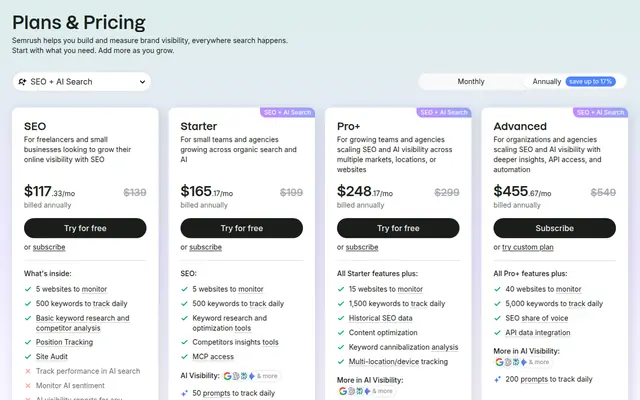
The cost maths for Semrush in a small agency, including the website cap on the entry plan that decides which tier you actually need.
-
 Head to head
SEO Tools for Small Agencies
Semrush vs Moz for Consultants
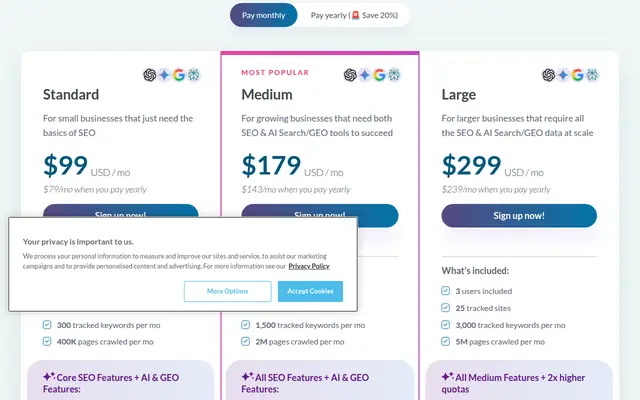
Semrush and Moz compared on verified pricing, included seats and website limits, and the seat maths that decides it for a small consultancy.
-
SEO Tools for Small Agencies
Best SEO Tool for Small Agencies
A cost-per-client comparison of Semrush, Ahrefs and Moz Pro for small agencies, including project caps, keyword limits, annual discounts and extra seats.